Most Pacific Northwest roofs need a professional soft wash every two to three years, and every 12 to 18 months if the roof sits under tree cover or faces north. Moss and algae grow wherever a roof stays damp, so shade, slope and material matter more than the calendar.
That answer surprises people who clean on a fixed schedule. A sunny south-facing roof in Gresham and a shaded north-facing one two streets over can be on completely different timelines, even though they get the same rain. Here’s how we figure out the right interval for a home.
What actually sets your cleaning schedule
Portland-area roofs get roughly 36 inches of rain a year, and the wet season runs from October into May. Moss spores are always in the air; they only take hold where moisture lingers. So the real question is how long your roof stays wet after each rain. These are the factors that matter most:
- Tree canopy: Douglas fir, maple and cedar shade the roof and drop needles and leaves that hold water against the shingles.
- Orientation: North-facing slopes get the least sun and grow moss fastest, often a full year ahead of the south side.
- Roof material: Rough-textured composition shingles and cedar shake hold moisture longer than metal or tile.
- Pitch: Low-slope roofs drain slowly and collect debris in the valleys.
- Age: Older shingles have lost granules, and the rougher surface gives moss something to grip.
A realistic schedule by roof type
Open, sunny composition roofs: every 2–3 years
If your roof gets several hours of direct sun and has little overhanging foliage, black algae streaks are usually the first sign. These are mostly cosmetic early on, so you can stretch the interval, as long as you catch any moss before it lifts shingle edges.
Shaded or north-facing roofs: every 12–18 months
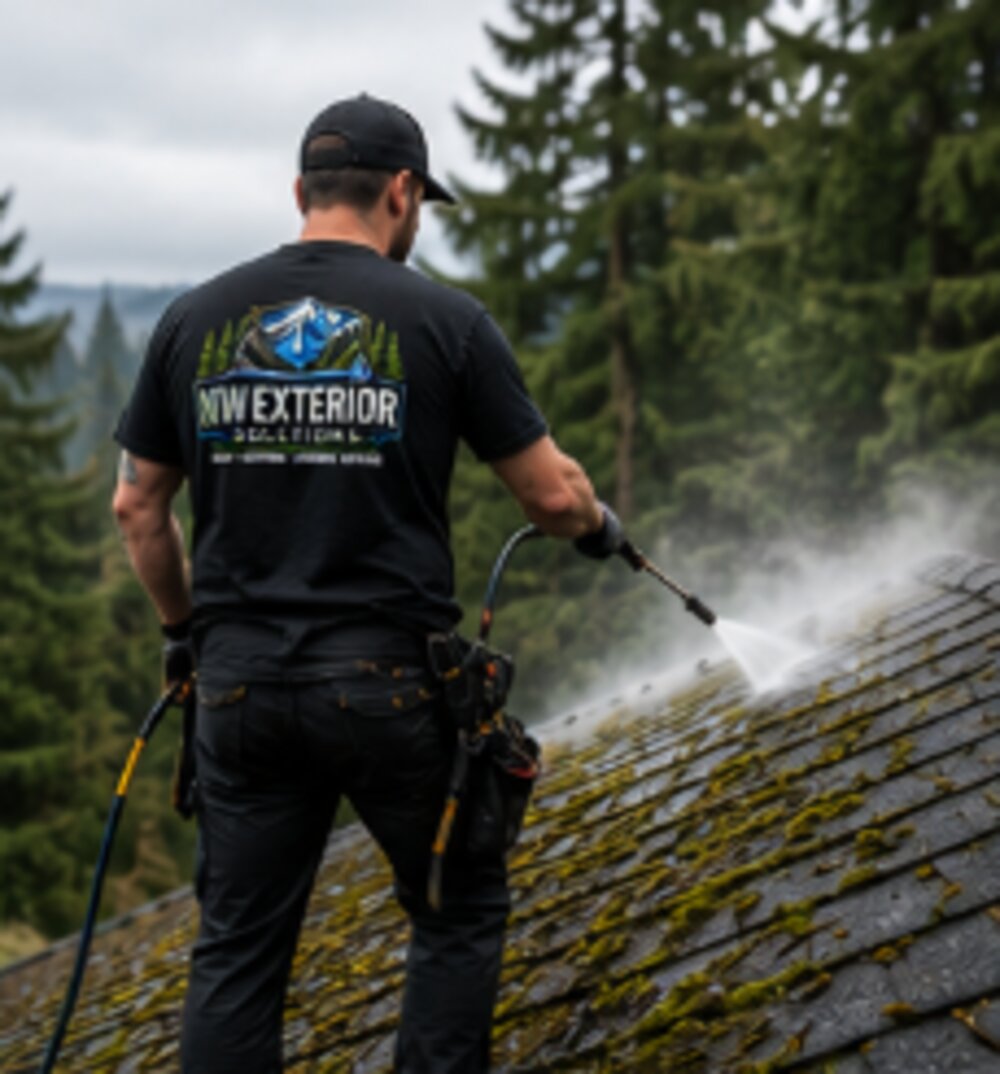
This is the group that gets caught off guard. On a heavily shaded roof, a thin green fuzz in spring can become thick, rooted moss cushions by the following fall. Annual or near-annual soft washing, paired with a moss treatment, keeps the roof from ever reaching the damaging stage.
Cedar shake: every 1–2 years, gently
Cedar stays wet longer than any other roofing material and needs lower pressure and gentler chemistry. It also benefits from a regular schedule, because heavy moss on shake can rot the wood from the surface down.
Why waiting too long costs more
Moss isn’t just ugly. Its root-like rhizoids work under shingle tabs, lift them, and let wind-driven rain reach the underlayment. Once that happens, a cleaning can’t undo the damage, and the repair bill lands on top. Cleaning on time is the cheaper path, and you can see what that typically looks like in our Portland roof cleaning cost guide.
Just as important, the method matters. Pressure washing a roof strips protective granules and shortens its life, which is exactly the opposite of what you’re trying to do. Low-pressure soft washing with biodegradable cleaners kills moss and algae at the root and leaves the shingles intact.
The best time of year to schedule it
Early fall, from September through October, is the sweet spot: the dry weather is still here, and you clear the roof just before the wet season gives moss its best growing conditions. A treatment applied then has months to work before spring. Late spring works too, if you missed the fall window. We see a lot of homeowners across Gresham and east Multnomah County book in October for this reason, and you can check our Gresham service area page for local details.
Signs your roof is due now
- Green or brown moss cushions along shingle edges or in valleys
- Dark streaks (algae) spreading down the slope
- Needles and debris packed in valleys or behind chimneys
- Granules collecting in gutters or at downspouts
- Shingle tabs that look curled or lifted
If you spot more than one of these, don’t wait for the rains to pick up. Get a free instant quote and take 30% off your first wash; we’ll tell you honestly whether your roof needs a full soft wash now or can safely wait another season.
Get a free instant quote — 30% off your first wash.
Claim My 30% Off